
NRL, Rugby League, the footy. Whatever you call it, there’s more to it than brawn and biff.
At it’s best, Rugby League is a highly technical and multi-layered game full of remarkable feats of skill and athleticism.
Two sides comprised of 13 players each take to a field to do battle over 80 minutes, with eight more players (four per side) waiting in the wings (not to be confused with the position winger) to take part via interchange.
Those 13 players are assigned very specific and diverse roles or positions as they are known.
Knowing the function of and difference between these positions is integral to understanding the great game of Rugby League.
Understanding what the 13 positions in rugby league are is essential to growing your knowledge of the great game. Plus it’s also important from a punting perspective as well, (front rowers aren't likely to score that many tries you know), that’s why here at Sportsbet we’ve created this handy guide explaining the different Rugby League positions.
With the new season about to get underway, there’s never been a better time to familiarise yourself with just who does what on the footy field. Check out our Rugby League positions explained guide below.
Rugby League Positions Listed
Starting Rugby League Positions
1. Fullback
2. Right Wing
3. Right Centre
4. Left Centre
5. Left Wing
6. Five-Eighth
7. Halfback
8. Prop
9. Hooker
10. Prop
11. Second-Row
12. Second-Row
13. Lock
Bench Rugby League Positions
14. Interchange (usually a Utility player)
15. Interchange (usually a Forward)
16. Interchange (usually a Forward)
17. Interchange (usually a Forward)
18. 18th Man (injury/concussion reserve)
Rugby League Positions Explained
1 - Fullback
Arguably the most important position in the modern game, the role of the Fullback has drastically evolved over the years.
Assigned the no.1 jersey, the Fullback is the chief organizer for their side, particularly in defence.
You’ll often see them standing behind the defensive line barking instructions to the rest of the team and then quickly getting on their bike to try and chase an opposition player who has made a line break.
Once merely support players in attack, the role of the Fullback with the ball in hand is now very different to what it once was.
The modern no. 1 is expected to chime in with sweeping attacking moves, providing and extra man to create an overlap and then use their ball playing ability to find a free play to cross for a four-pointer, often a Winger.
2 & 5 - Wingers
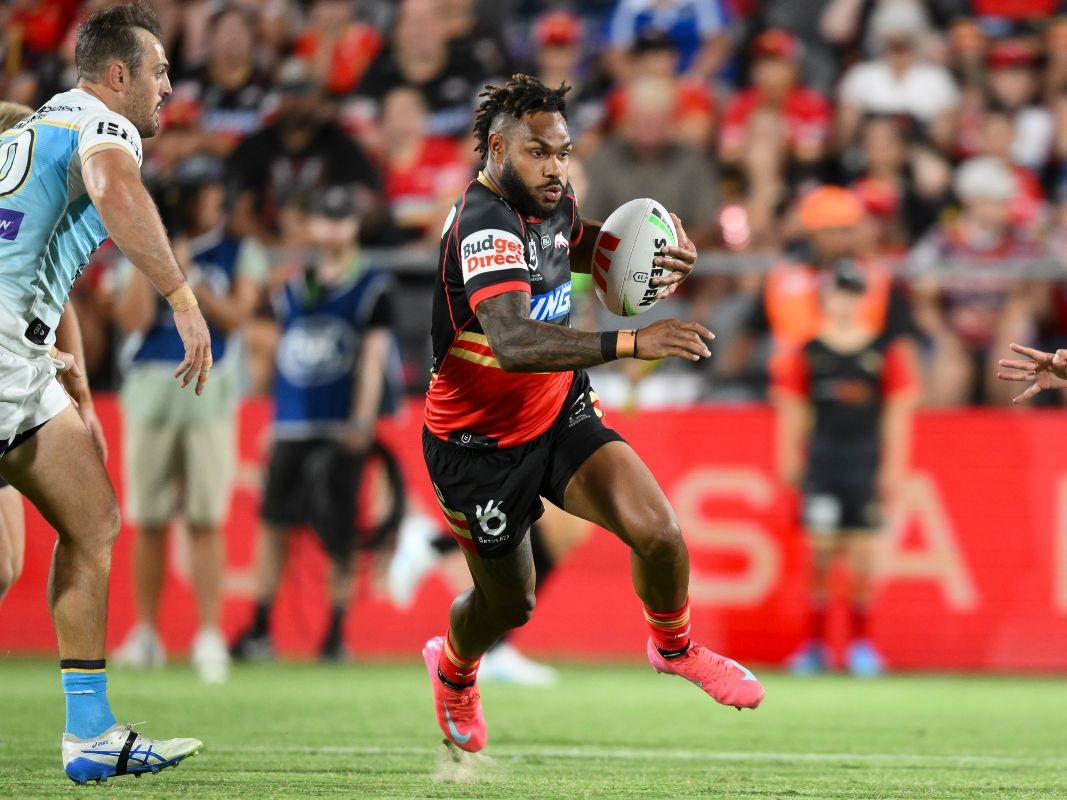
Each side has two Wingers, and they are the Rugby League position responsible for scoring the most tries.
If you check out the top 10 highest try scorers of all time, you’ll see just how many of them are Wingers.
They start sets with scoots out of trouble and ideally, they finish them too, crossing the opposition try line.
3 & 4 - Centres
One in from each winger you will find a Centre. Off the ball their job is simple, stop the opposition Centre.
In attack they are tasked with trying to create space for either themselves or their outside winger to try and score. Strength and speed are a must here.
6 - Five-eighth or No.6
Known elsewhere as a Stand-off, the Five-eighth is one of the two main play makers on each side.
In Rugby League, the Five-eigths is often simply referred to as the number 6 andare usually the second receiver in attack and are often responsible for initiating attacking plays.
Elite passing and running has long been associated with no.6s in Rugby League, as the next position usually handles most of the kicking.
7 - Halfback or No.7
We often hear the question ‘what position is number 7 in rugby league?’ With so many positions and numbers it’s easy to get confused. No. 7’s, conventionally known as halfbacks are the rockstars of Rugby League. Always at the centre of everything, they are their side's organizer and general in attack.
Traditionally they also are the predominant kicker for their team and often find the ball in their hands on the fifth and last tackle.
9 - Hooker or Dummy Half
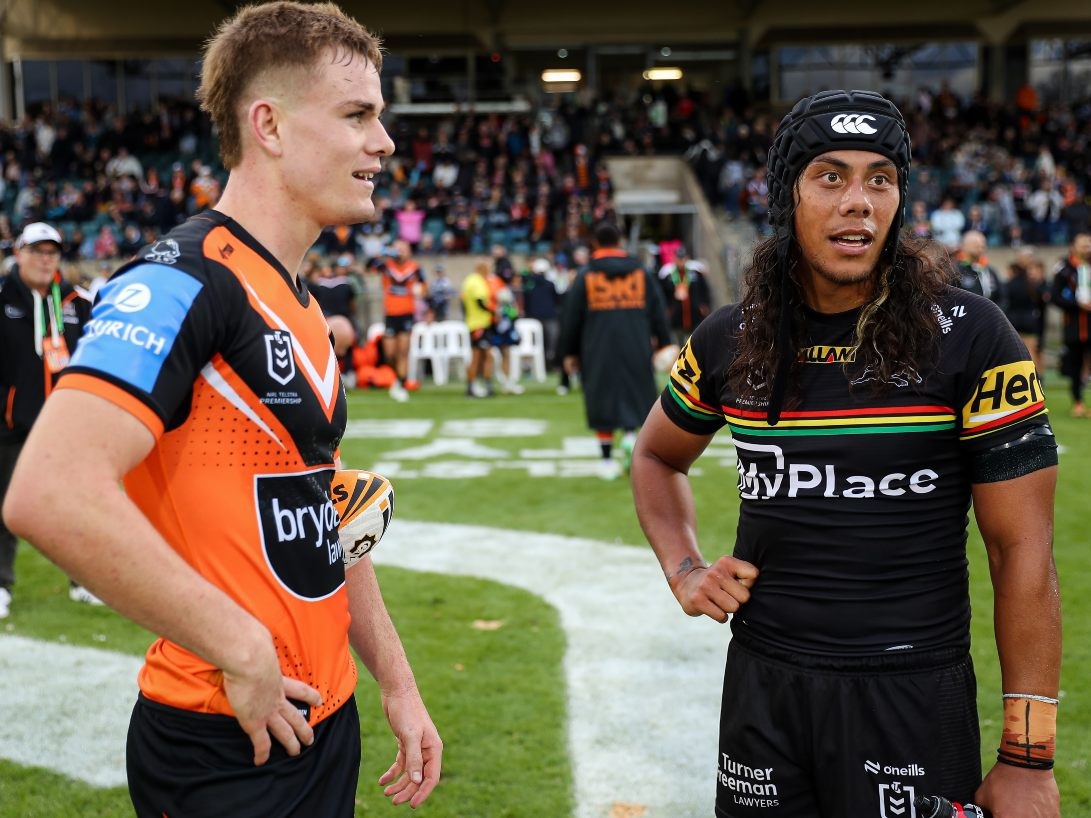
Dummy-half, Rake, Hooker? Yep, that’s the most popular name for this Rugby League position.
That’s because they were once responsible for “hooking” the ball with their foot when it was fed into a scrum.
If you tried that or tried to push or to show any intent or movement whatsoever in a modern-day scrum, you’d probably be sent off.
While their role has changed slightly, the name has stuck. As a key member of a rugby league teams ‘spine’, the dummy half has one of the most important rugby league positions. These days Hookers focus more on attacking and defending up the middle of the field and ensuring their halves have excellent service from Dummy-half.
8 & 10 - Front Row or Props
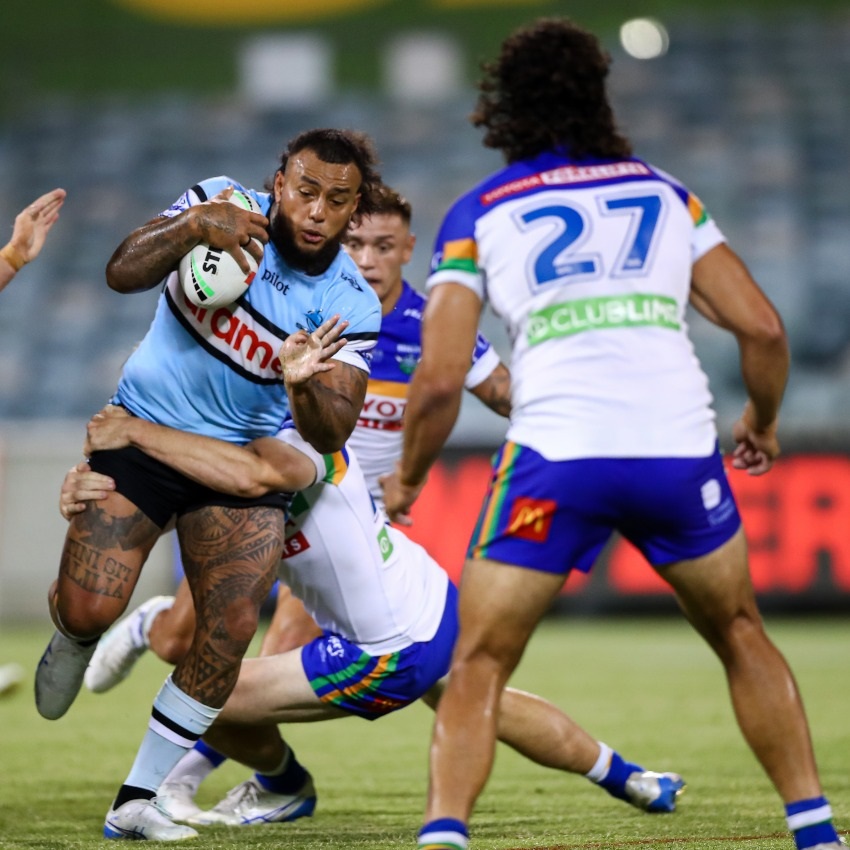
The big boys! Also known as Props, Front Rowers have a pretty simple remit – run hard and tackle hard.
Nearly always the biggest players on the park, Front Rowers do most of the grunt work for their side.
11 & 12 - Second Row
Faster and more agile versions of Props, Second Rowers do plenty of tackling and take a decent amount of hit-ups, but they are expected to contribute more in attack than their fellow forwards.
As a result, the offload has become a must-have weapon in the arsenal of the modern day Second Rower.
13 - Lock
The final starting position on a Rugby League field is that of Lock Forward. Known simply as a “Lock” this role is that of a loose forward.
Normally a hybrid between a Prop and a Second Rower, a Lock will often have the ability to play either of those positions if called upon.
A ball player and a tackling machine, the modern-day Lock can do it all. For the top teams, the Lock often acts as an additional playmaker, freeing up space for the halves to do their thing – Penrith we’re looking at you.
Interchange
Each side has four interchange players on their bench. These players can be brought on at any time and can play any position.
Nowadays, coaches are only allowed to make a maximum of eight interchanges per game.
It is standard to pack three forwards and a utility player who can cover a number of positions on the bench, however you can have four wingers sitting on the pine if you so wish.
That would be ill advised, as the big boys in the middle of the park need a rest from time to time.
So, there you have it, those are all the different Rugby League positions. You’re now ready to answer any pub trivia asking what are the positions in rugby league.
We recommend starting your journey with our NRL Category where you can dive into all things rugby league, from team by team season previews to weekly NRL tips and predictions.
Fancy a flutter on the footy? Check out our NRL betting guide first to get the ins and outs of betting on gods game!
Relevant Articles
How To Bet On The NRL: NRL Betting Guide
Which players have scored the most tries in an NRL Season?
Most Tries in NRL History: Top 10 Highest NRL Try Scorers